
Pop Jigsaw - Jigsaw Puzzles
LoveColoring GameBoard
4.9496.00 Reviews
- Version
- 1.3.5
- Installs
- 1.00M
- Age Rating
- Everyone
Screenshots
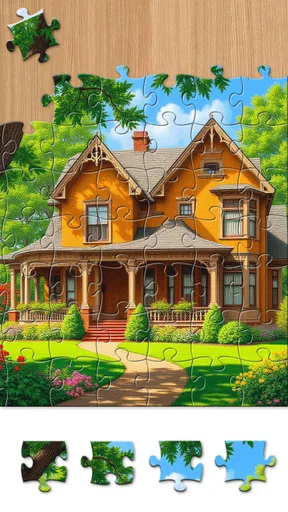

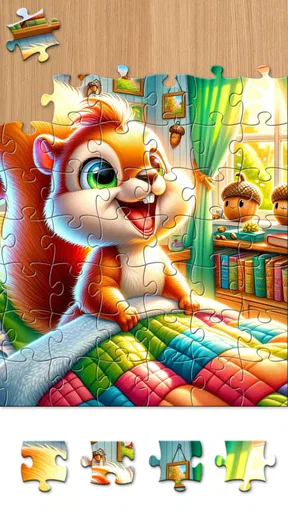
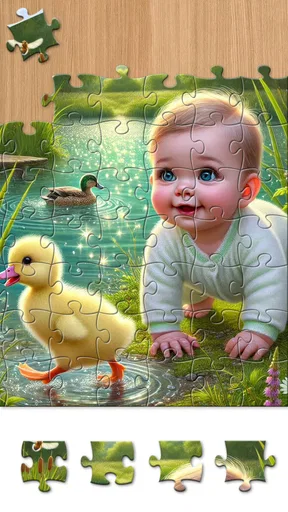
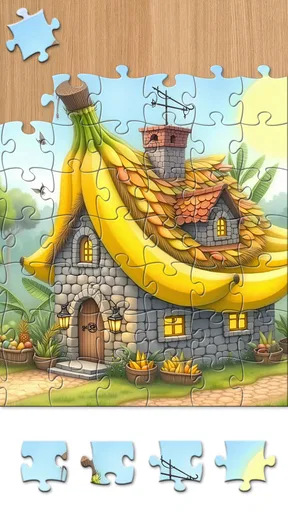
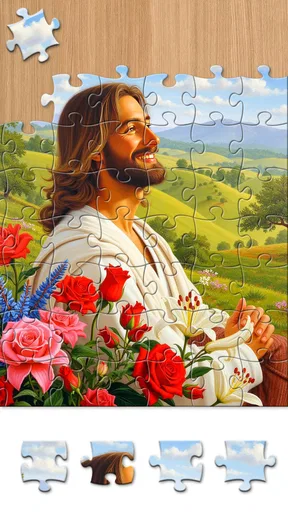
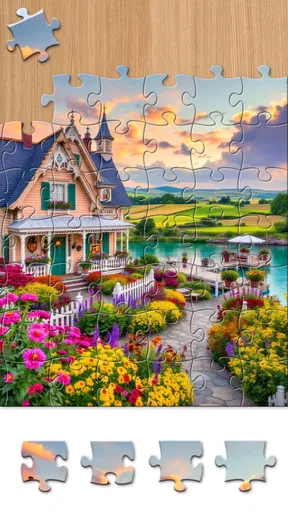
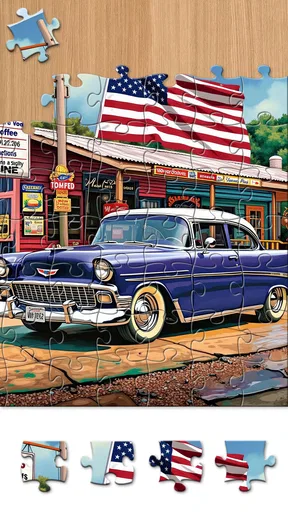
Our Review of Pop Jigsaw - Jigsaw Puzzles
 Analysis by Appyee
Pop Jigsaw - Jigsaw Puzzles caught my attention because it treats a familiar board-game idea as something more immediate: instead of wrestling with a scattered picture in the usual way, I spend my time popping pieces into place. That small change gives the experience a lighter, more tactile feel, and it makes the game easy to understand within a few moments. I played it as a short relaxation game rather than as a demanding puzzle challenge, and that is where it makes the most sense.
The game is free to start, carries an Everyone age rating, and comes from LoveColoring Game. It belongs to the board category, although its presentation feels closer to a casual mobile pastime than to a traditional tabletop puzzle. Its store summary calls it “A New Way to Puzzle!”, while the short description reduces the idea to “Pop Jigsaw.” Those brief labels are accurate, but they do not really explain the appeal: the pleasure comes from the combination of colorful artwork, simple interaction, and a pace that lets me decide whether I want to play for a minute or settle in longer.
How the visual language turns a familiar puzzle into a calmer game
I focus here on how the game’s clear, image-first presentation makes each puzzle feel like a small pause rather than a test of patience. That calmer approach is especially useful on a phone, where simple visual cues can make a short session feel satisfying without demanding a long stretch of concentration.
A first impression built around clarity
My first impression was that the game wants to remove unnecessary resistance. Traditional jigsaw apps often ask me to drag, rotate, inspect, and repeatedly test pieces against a larger image. That can be satisfying, but it can also feel fiddly on a phone. Pop Jigsaw presents its central idea in a more direct way, making the act of placing pieces feel closer to tapping through a sequence of small visual decisions.
That distinction matters on a touchscreen. A phone is excellent for quick taps, but it is not always comfortable for intricate dragging, especially when the puzzle image contains many similar colors or fine details. The popping approach gives the interaction a more forgiving rhythm. I can focus on recognizing the next useful move instead of constantly correcting a piece that slipped under my finger.
The result is approachable without being completely empty. I still need to look at patterns, edges, color transitions, and the shape of the developing image. The game does not turn puzzle solving into a passive slideshow; it simply makes the physical side of the activity less demanding. For me, that makes it better suited to casual sessions than to players who want the exacting control of a serious jigsaw simulator.
Artwork that supports the mood
The art direction does much of the emotional work. The visual identity is built around the appeal of completing an image, so the artwork needs to remain readable while pieces are being handled. I found that the strongest moments came when a partly finished picture began to feel recognizable. That gradual reveal supplies a quiet reward even when the individual move is simple.
This is not a game I would choose for elaborate world-building or a narrative setting. Its “world” is the collection of images and the clean space around them. That simplicity is intentional. There are no characters or story scenes competing with the puzzle itself, so the mood comes from color, composition, and the steady movement from incomplete to complete.
One useful way to approach the game is to treat each image as a short visual reset. If I am tired after work, I do not necessarily want a competitive board game with timers, opponents, or a long rule explanation. I want something that gives my attention a narrow, manageable target. The artwork helps create that target, while the pop-based interaction keeps the process from becoming laborious.
Why the setting feels coherent rather than decorative
In many casual puzzle games, the background is merely a container for the main activity. Here, the surrounding presentation works best when it stays quiet and lets the picture being assembled remain the focus. That restraint is important because a busy interface would work against the game’s strongest quality: its ability to create a small pocket of concentration.
I also noticed that the incomplete image changes how I look at the board. At the beginning, I am searching for obvious relationships. Later, I start paying attention to smaller visual clues because the picture has enough structure to guide me. The game therefore creates a gentle progression inside each puzzle, not through a dramatic level system, but through the changing amount of information on screen.
The most effective design choice is the way the picture becomes the destination and the interaction becomes the relaxation. That balance keeps the mechanics visible without allowing them to overpower the mood. It is a modest idea, but it is more coherent than simply placing a conventional jigsaw on a phone and expecting touch controls to do all the work.
Sound and the pace of a short session
The audio side of a puzzle game has a difficult job. It should make actions feel responsive, but it should not demand attention from someone who is using the game to unwind. Pop Jigsaw’s overall rhythm is best understood as understated: the visual response to progress matters more than spectacle, and the game’s calm identity depends on keeping each action easy to follow.
I would not approach this as an audio-led game. Its mood comes primarily from the images and the repeated sense of completion. That can be a strength for people who play with low volume or while listening to something else. It also means that anyone expecting a rich soundtrack, dramatic transitions, or a strongly narrated setting may find the experience too quiet in spirit.
The pacing works particularly well in everyday gaps. I can imagine opening it while waiting for an appointment, taking a short break from studying, or sitting on public transport when I do not want to commit to a full game. There is no need to remember a complicated story or rebuild a strategy after putting the phone down. The visual state of the puzzle gives me an immediate point of return.
At the same time, the lack of pressure may not suit every player. People who enjoy countdowns, rankings, head-to-head competition, or increasingly punishing boards will probably find the rhythm too gentle. This is a game for controlled attention, not adrenaline. Its pacing is a feature when I want calm, but a limitation when I want urgency.
How the popping mechanic changes puzzle solving
The central mechanic is a good fit for mobile play because it reduces the awkwardness associated with manipulating many small objects on a limited screen. In a conventional digital jigsaw, I often spend as much effort controlling pieces as interpreting them. Here, the interaction feels more like selecting the correct next step, which keeps the focus on visual recognition.
That does not mean every decision is automatic. I still benefit from scanning the whole picture before acting. My most reliable approach was to identify broad color blocks first, then use strong lines and distinctive shapes as anchors. Working randomly can be tempting because the interaction is quick, but a little visual planning makes the board feel more purposeful and reduces the sense of simply tapping until something works.
A second useful habit is to pause when several possible pieces appear equally attractive. The game’s relaxed rhythm gives me room to compare them rather than rushing into the first available move. This is where the board-game character remains important: the satisfaction comes from making a small correct choice, not merely from watching the image fill itself.
The trade-off is that players who love the physical logic of real jigsaws may miss the freedom to pick up a piece, rotate it, and test it against several locations. Pop Jigsaw is not trying to reproduce every part of that experience. It translates the idea into a faster, more touch-friendly form. I see it as a reinterpretation rather than a replacement.
Where it fits among familiar alternatives
Compared with a standard jigsaw app, this game is easier to enter and less dependent on precise finger movement. That makes it more comfortable for quick sessions and for players who find crowded piece layouts frustrating. Compared with match-three board games, it offers less emphasis on chains, score chasing, and tactical combinations. The reward is not a cascade of reactions; it is the gradual recognition of a completed image.
It also differs from coloring games, despite the visual connection. Coloring usually asks me to choose shades and fill areas according to my own sense of style. Pop Jigsaw gives me a more defined route: I am reconstructing an image through guided visual decisions. If I want creative freedom, a coloring app would be the better choice. If I want a clear finish line without the pressure of a traditional puzzle interface, this game has the stronger fit.
Players should also think about how they feel about repetition. The core interaction is intentionally focused, and that means the game’s appeal depends on enjoying the small cycle of observing, selecting, and completing. I found that satisfying in short bursts. Over a long uninterrupted session, someone may want more variation in rules or a stronger sense of escalation than this format naturally provides.
Free access and the practical trade-off
The game is free, which makes it easy to try without turning the decision into a purchase commitment. It includes in-app purchases ranging from $4.99 to $49.99 per item, so I would recommend checking the purchase prompts carefully and deciding in advance how much optional content or convenience is worth to you. The free entry point is useful, but it does not automatically mean every part of the experience will feel equally unrestricted.
This is especially relevant for parents. The Everyone rating makes the game broadly approachable, and the simple board format is easy to understand, but adults should still keep an eye on purchase settings when a child uses the device. That is not a criticism of the puzzle mechanic; it is simply sensible practice for any free mobile game that offers optional spending.
For storage and compatibility, the current version is 1.3.5 and the game requires Android 8.0 or later. That requirement puts it within reach of many older Android devices, although actual comfort will still depend on screen size and responsiveness. On a smaller display, the clean interaction is an advantage, but the artwork may be less enjoyable to inspect than it is on a larger phone or tablet.
Who will enjoy it most
I would recommend Pop Jigsaw to someone who likes visual puzzles but does not want the fiddly controls of a full digital jigsaw. It is also a good match for casual players who want something calm, readable, and easy to pause. The game can work as a short evening wind-down, a low-pressure break between tasks, or a simple activity to share with a child who enjoys pictures and tapping.
It is less suitable for players seeking deep board-game strategy. The game’s challenge comes from visual placement and attention, not from building a long-term plan against an opponent. It is also not the best choice for anyone who needs strong competitive motivation, a story-driven setting, or extensive control over puzzle difficulty. In those cases, a traditional jigsaw app, a competitive puzzle title, or a coloring game may offer a more satisfying experience.
One practical use case stood out to me: using it as a transition between demanding activities. After finishing a long task, I often need something more focused than scrolling but less demanding than a strategy game. A short puzzle session gives my mind one clear object to follow. Because the game does not rely on a complicated narrative, I can stop without feeling that I have abandoned anything important.
Popularity, polish, and what that means for a new player
The game has passed 1 million installs, with an average rating of 4.9 from around 27 thousand ratings. It also has around 496 written reviews. Those figures suggest that the simple format has found a substantial audience, and my own experience explains why: the game communicates its basic idea quickly and does not require a long learning period before the interaction becomes enjoyable.
Popularity should not be confused with universal appeal, though. A highly rated relaxing puzzle can still feel too repetitive for someone who wants constant novelty. I would read the strong response as evidence that the game delivers its intended mood effectively, not as a promise that it will replace every other board or puzzle game on your phone.
My final view on the atmosphere and the mechanics
After spending time with Pop Jigsaw, I see it as a carefully focused casual board game rather than a feature-heavy puzzle collection. Its art direction gives the player a clear visual goal, its setting stays out of the way, and its pace supports short, comfortable sessions. The popping mechanic is the key reason it works on a phone: it preserves the satisfaction of arranging an image while avoiding much of the touch-control frustration found in ordinary jigsaw layouts.
The limitations are closely tied to those strengths. The calm mood can feel passive if I am looking for competition, and the streamlined interaction may disappoint players who enjoy the physical complexity of sorting and rotating pieces. The optional purchase range also means I would approach the free experience with awareness rather than assuming that every desirable extra is included at no cost.
Still, I think the game succeeds on its own terms. LoveColoring Game has taken a familiar puzzle idea and shaped it around a more immediate mobile rhythm. If you want a peaceful picture-based activity that is easy to start, easy to pause, and less fiddly than a conventional digital jigsaw, I would happily suggest giving it a try. Choose it for the mood and the accessible interaction, not for competitive depth. That is where Pop Jigsaw feels most convincing.
Verdict
Strengths of Pop Jigsaw - Jigsaw Puzzles
- Large variety of colorful puzzles for different interests.
- Relaxing gameplay suitable for short or extended sessions.
- Adjustable difficulty helps beginners and experienced players.
- Simple controls make piece placement easy on touchscreens.
- Offline play is useful when traveling or without internet.
Limitations of Pop Jigsaw - Jigsaw Puzzles
- Some puzzles or features may require in-app purchases.
- Frequent ads can interrupt gameplay between puzzle sessions.
- Large puzzle collections may take time to download or load.
- Limited social features reduce interaction with other players.
- Small pieces can be difficult to handle on smaller phone screens.
Other Releases by LoveColoring Game
View All
Fairytale Color by number game
Board4.9

Tangle Color by Number Book
Board4.9

Country Farm Coloring Book
Board4.9

Pop Color - Paint by number
Board4.8
Similar Picks in This Category
View All
Ludo King®
Gametion4.1

Ludo
Yarsa Games4.6

Tile Master® - Matching Game
Higgs Studio3.6

Checkers Online
CC Games4.6

Dominoes
Loop Games4.7

Chess
Chess Prince4.6
Frequently Asked Questions
What is Pop Jigsaw - Jigsaw Puzzles?
Pop Jigsaw - Jigsaw Puzzles is a casual puzzle game focused on completing colorful jigsaw images. Players select a picture, choose a suitable difficulty, and arrange the scattered pieces until the image is restored. It is designed for short relaxing sessions, although larger puzzles can provide a longer challenge for users who enjoy more demanding gameplay.
Is Pop Jigsaw - Jigsaw Puzzles free to download and play?
The game can generally be downloaded without an upfront purchase, but the exact availability of advertisements, optional purchases, or premium puzzle content may depend on the version and platform. Before installing, check the store listing for current pricing details, in-app purchase information, and whether certain image packs or features require payment.
Does Pop Jigsaw - Jigsaw Puzzles work offline?
Many basic jigsaw activities may be playable without a continuous internet connection once the necessary content has loaded. However, online access can still be required for downloading new puzzle collections, displaying advertisements, synchronizing progress, or using other connected features. If offline play is important, test the game after installation rather than assuming every puzzle is available offline.
Is Pop Jigsaw - Jigsaw Puzzles suitable for children?
The simple matching gameplay can be appropriate for children who enjoy visual puzzles, but suitability depends on the child’s age, reading ability, and the content included in the available image collections. Parents should review the store rating, advertising behavior, privacy information, and purchase settings. Using parental controls is recommended if children will play without supervision.
What devices are compatible with Pop Jigsaw - Jigsaw Puzzles?
Compatibility depends on the specific Android or iOS release and the requirements set by the developer. Before downloading, review the official store page to confirm the supported operating-system version, required storage, and any device limitations. Keeping the system updated can improve stability, although older phones or tablets may experience slower loading or reduced performance.
Play our best games!


